Major Benjamin Imgham writes:
Before sitting down to write this article, I took a minute to reflect on the last six months. There is no doubt that it has gone exceptionally quickly, but having only completed half of my tour there is the pervasive sense of disappointment in missing out on so much back in the UK. Despite the wonders of technology and the ability to receive emails in seconds, Skype and satellite telephone, there are times when the contact only heightens the feeling of being disconnected from the real world. Whilst being away, two new additions to the Ingham household have appeared in the form of the twin girls Alice and Charlotte, but equally we have lost two family members: the dogs Tyro and William. Being away, I have been unable to share the delight of watching the nephews and nieces grow up, but I have also avoided the pain of loss. The key question is: ‘do the benefits of deploying for a year outweigh the significant sacrifices?’
At this time it is impossible to answer the question. But as we reach a significant tipping point in the conflict against the insurgency within Afghanistan, it is evident that the coalition forces play a role in the prevention of the spread of global terrorism through the disruption of the terrorist network and safe havens. I am pleased that I am contributing to the campaign.
The last month has also been marked with a few highlights in terms of getting ‘out and about’. The first occasion was to a location within the far eastern side of the country, to conduct an assessment of some of the Pakistan and Afghanistan border observation posts. The journey, by helicopter, took us across some spectacular landscapes that would not look out of place on Mars. Red and grey treeless mountains weathered by centuries of wind and rain and baked for years of seemingly endless scorching summers rose out from the barren, dust-ridden deserts. The occasional river, a shocking turquoise blue with cultivated banks, formed a small ribbon of vivid colour set against an otherwise lunar landscape. Small hamlets nestled within the inhospitable terrain, interconnected by thin tracks that looked like a lattice of spider webs when viewed from above. The absence of roads, telephone or electricity pylons and no obvious signs of economic development indicate that those individuals living within these rural areas lead a medieval, subsistence, existence. It was during this trip that we landed in a small outpost where the remnants of an old British fort still doggedly stood, a sharp reminder of our inauspicious colonial past in the region, which was marred by defeat. An American Infantry Battalion ran the outpost and the irony of western soldiers back in the same location 200 years later was not lost on us.
The second trip was more of a cultural insight into the inner workings of some of the more secretive British military organisations. I was due to assist with some training support which, I was led to believe, involved the delivery of a series of presentations. On arrival was I was dressed in a ‘bite suit’, a cumbersome padded uniform, and asked to run when attacked by the guard dogs. Running was not an option and I bravely stood my ground as the dogs closed in and then leapt. The dogs clearly enjoyed the experience, and me less so. Nevertheless, having offered my services to help train the dogs, I was dutifully given the opportunity to deliver my briefs and managed to leave almost fully intact the following day.
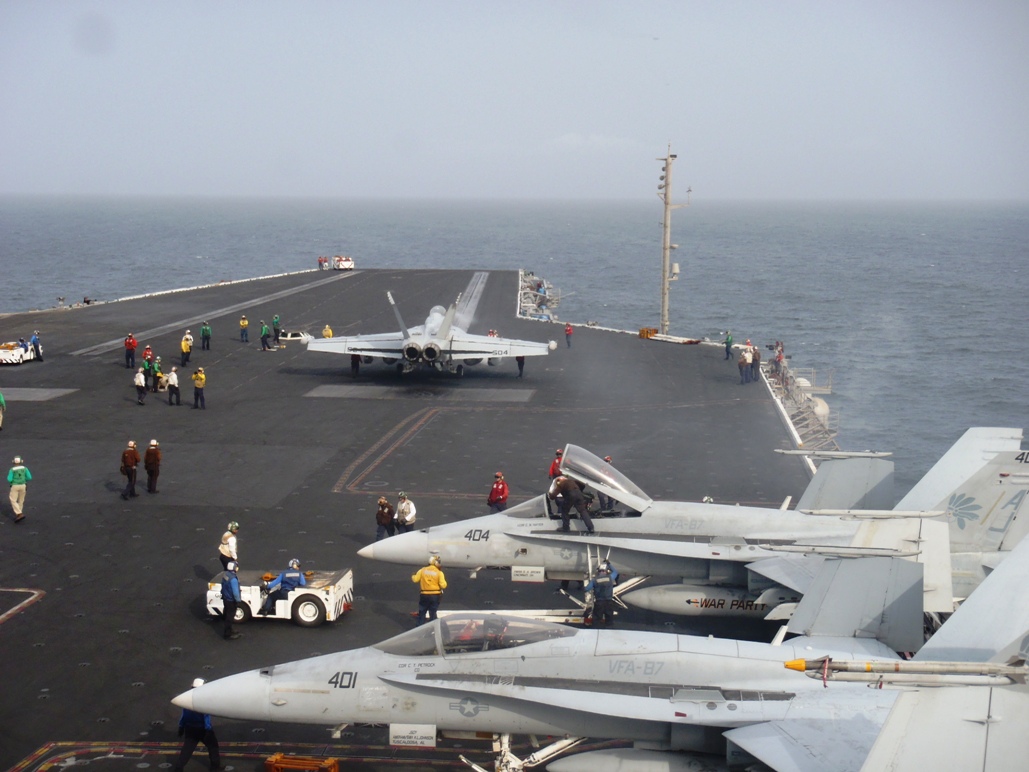
USS Bush
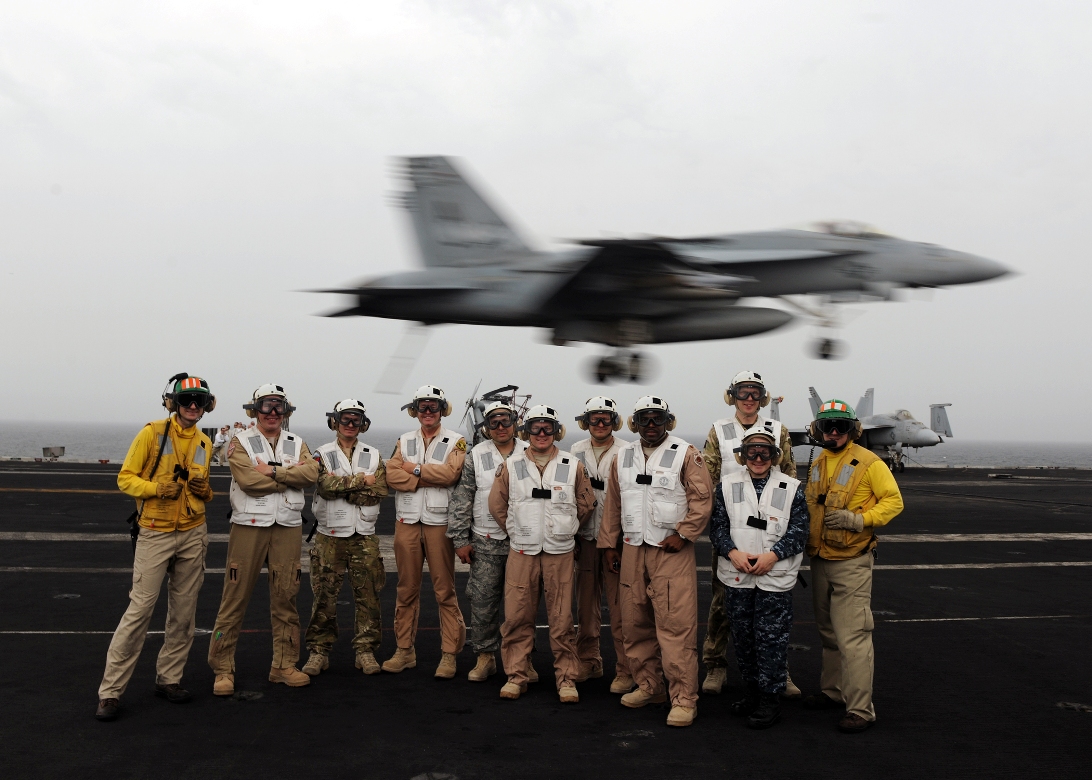
On the flight deck
The third trip has been one of the most interesting to date and an experience I shall not forget. A small team from my headquarters was asked to deliver some specific training to the pilots of the USS George W Bush, a Nimitz class American aircraft carrier, that had recently been deployed to support operations in Afghanistan from the Indian Ocean. We were transported to the ship, in what can only be described as a flying ship-container, onto the flight deck of the vast American vessel which was awash with impressive Naval jets and a hive of activity. The sight and sound of a F-18 Super Hornet being catapulted from the deck of an aircraft carrier and accelerating to over 100 knots in under two seconds is incredible. The inner working of the nuclear powered ship is nothing short of organised chaos. The ship is crewed by over 4000 personnel and space is exceptionally tight onboard; the closest analogy that I can make is that of an ant colony. We were exceptionally well hosted and dined with the Admiral of the fleet, the first female US Fleet Admiral in US history. I didn’t manage to sleep on the ship due to the constant noise; it is a metal monster churning, clanking and hissing 24 hours a day, spitting aircraft after aircraft into the sky and trapping them on the wire arresting hooks as they return from another combat mission over Afghanistan.
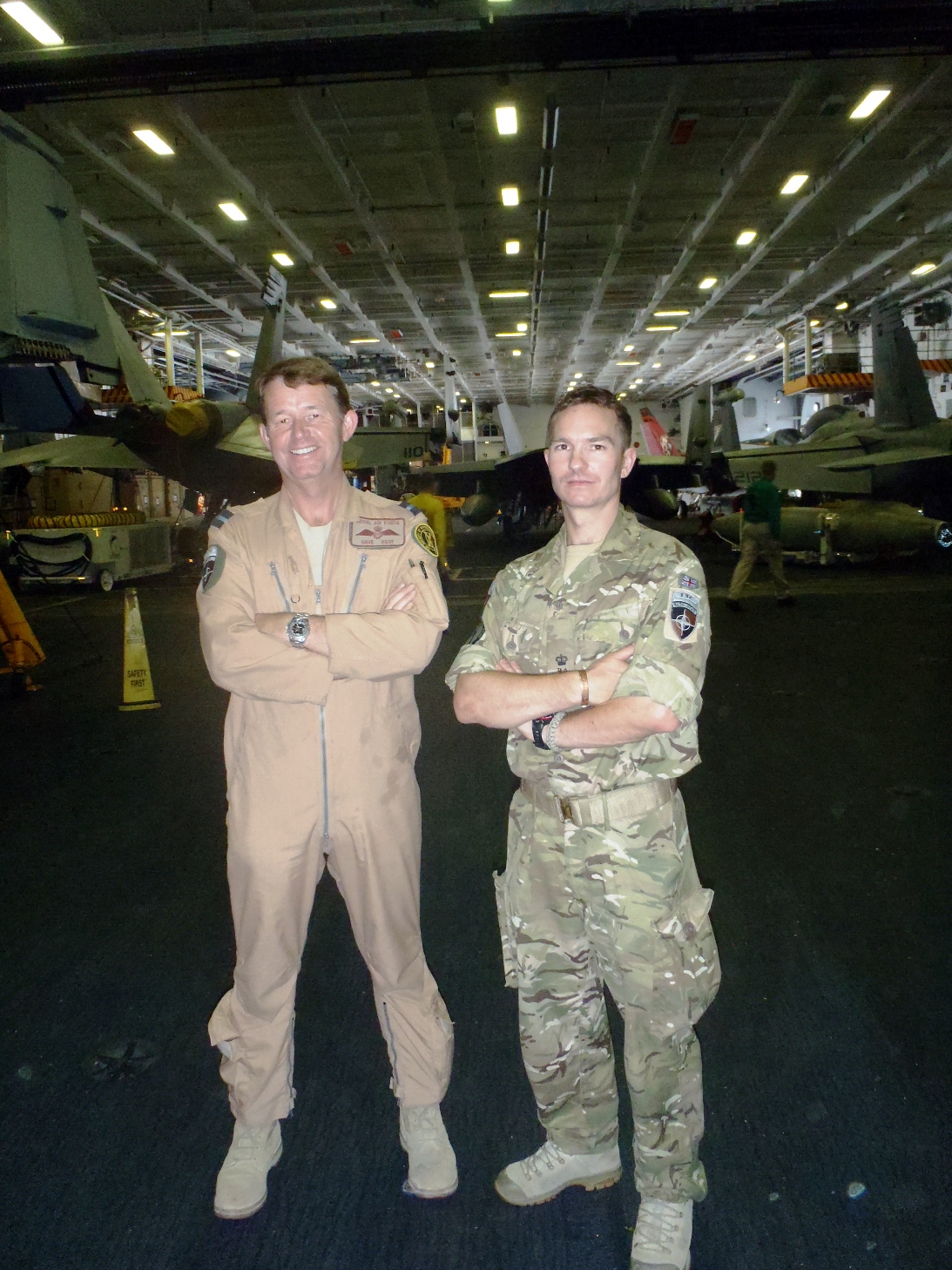
In the hanger of the USS Bush
I can’t account for the individual days of the last six months. It has been a blur of activity, and yet despite the imminent relief of a forthcoming R&R I am still intrigued as to what new challenges lie ahead during the next six months.


 PARWICH.ORG
Leave a comment