Just beyond the High Peak Trail railway bridge on the road to Pikehall, the following extraordinary sight greets you.
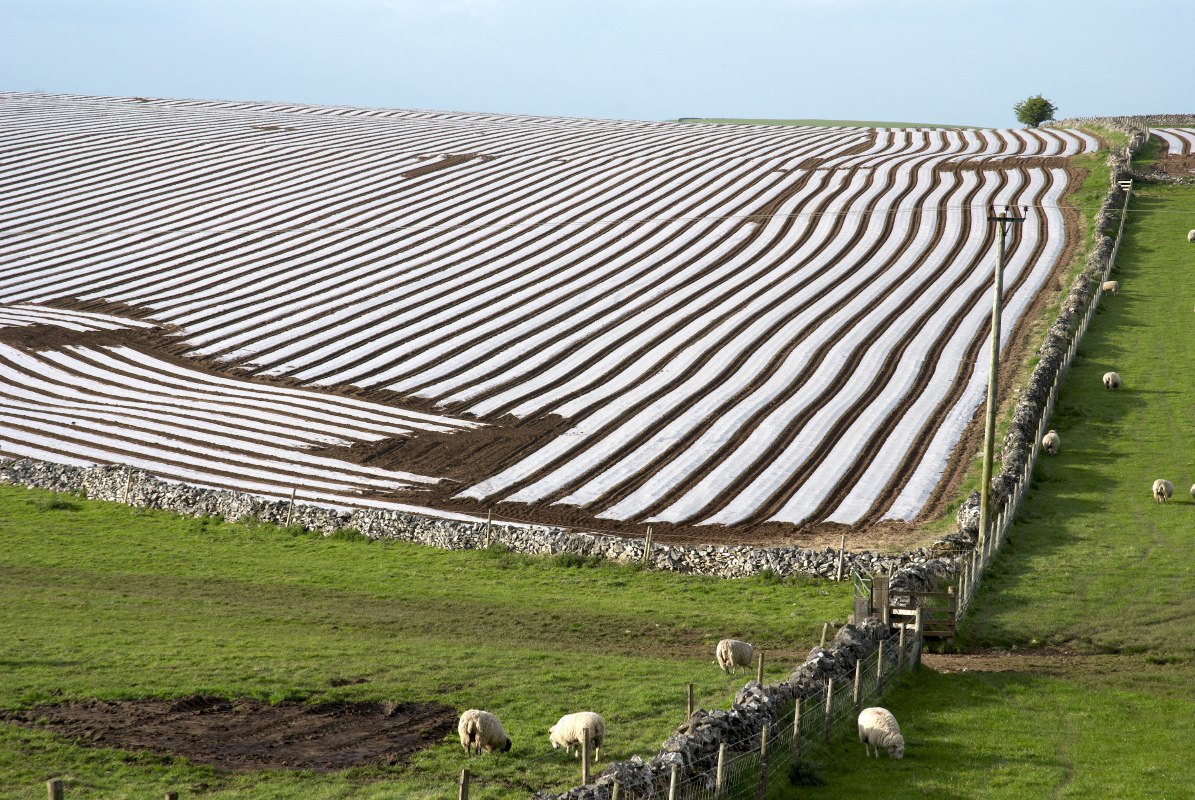
The field is planted with forage maize. Warmth is important to this particular crop, so rows of biodegradeable plastic are installed to trap the energy of the sun. Each plastic strip covers two rows of maize and the crop bursts through the membrane. Growing forage maize has never before been attempted in this area due to the temperature, so the success of this ‘high altitude’ planting will be interesting to watch.
By the way, forage maize is not intended for human consumption so this crop will not find its way to our dinner plates!


 PARWICH.ORG
I am not sure if this is a figment of my imagination but I seem to remember reading somewhere that the Romans used to grow corn up here. Perhaps someone from the History Society could verify that. In which case it’s been done before – albeit not recently!
Parwich is always ahead of the trend, however …
Maize is from the Americas, so it would be ground breaking stuff if there was any evidence for it here before the sixteenth century.
Thanks Peter – I had a (faded) blonde moment there. By the way we spotted other crops near Over Haddon yesterday. Is this an organised experiment by a seed company or just a coincidence of farmers thinking alike?
Patti, I think I have realised what made you think that corn (as in maize) was grown here in Roman times. We are just on the height limit for commercially grain production, so as climate changes higher ground, such as around Pikehall, will vary in how successful cereal crops are.
From the late Stone Age through to the Roman period and later the climate was warm and, at this altitude, corn (as in general grain crops: wheat, etc.) was grown widely. Into the Medieval and Renaissance periods it was much cooler and cereals were only successful at lower altitude. I think the book “Wall to Wall” describes this process at Royston Grange (you will have remembered the word ‘corn’ but then misapplied it to maize).
Obviously as our climate warms, cereals are again worth growing higher up. This is presumably what is happening with maize. Certainly I recall sweet corn as being a bit hit and miss in my father’s garden in the north east at sea level in the 1960s and 70s, however now in my garden here it pretty reliable.