Hopefully this is only the first in a series of posts letting us know something more about the people behind the names on the War Memorial in St. Peter’s Churchyard.
(Jack) Brunskill Lowes (1912 to 1944)
Thank you to Alan for sharing this information on his father who died on active service on the India Burma boarder during the Second World War.
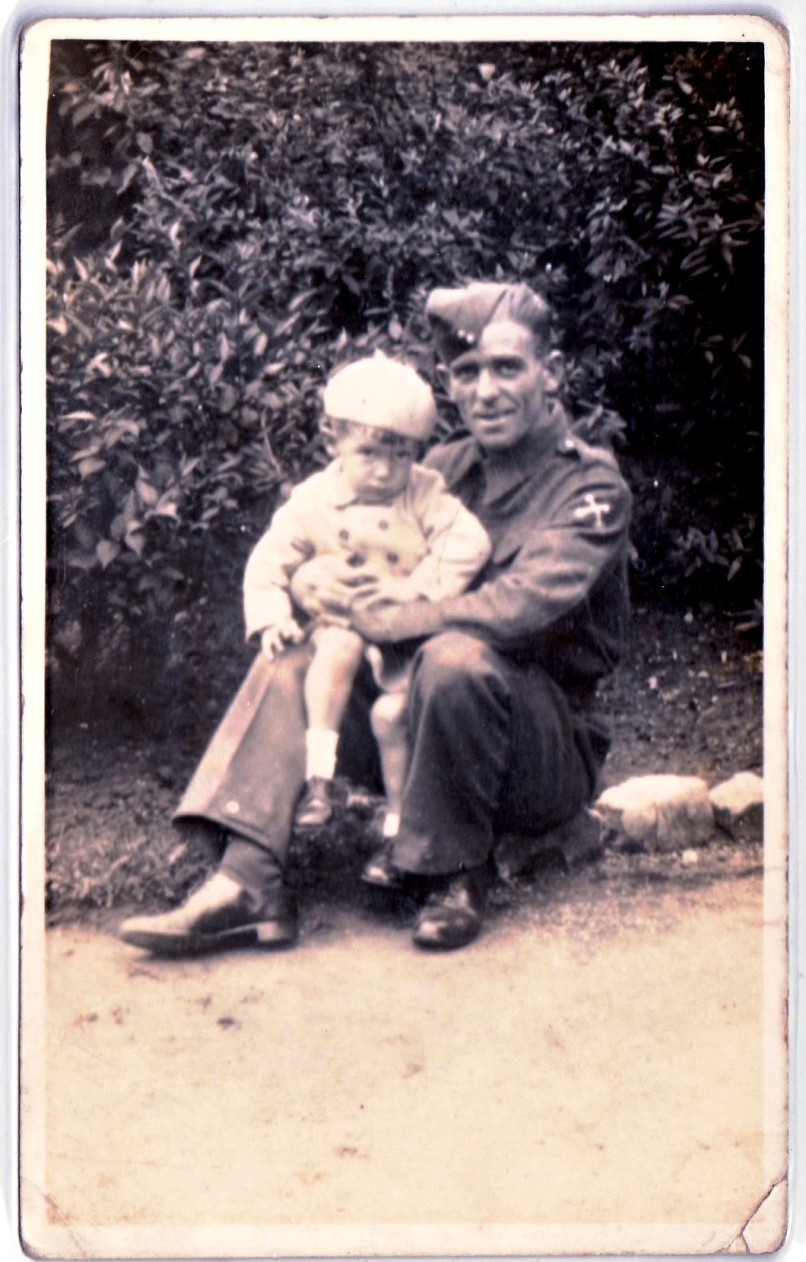 Jack Lowes was born in 1912 and spent his early childhood in Workington on the Cumbria coast. His father apparently abandoned the family, resulting in his mother putting her three children into the workhouse. Jack was aged 11years, his brother Thomas aged 9 years and their sister Elizabeth aged 3 years. Elizabeth died of pneumonia within three weeks of admission to the workhouse.
Jack and his brother were moved to an orphanage near by where he remained until aged 14 years, when he was sent to be a farm labourer.
Obviously Jack had his sights on the wider world and aged only 16 years he joined the Lancashire Fusiliers. He continued in the regular army from 1928 to 1936. He saw active service in India and Palestine. He was in India at the time of the rise of Gandhi’s Civil Disobedience campaign, including the Salt March, and of the inauguration of the new capital city, New Delhi designed by Edwin Lutyens. He was part of the British forces overseeing Palestine (see British Mandate of Palestine) and managing the tensions arising out of Jewish immigration. He was there for the start of the Arab Revolt in 1936 and the beginning of the Jewish military/terrorist campaign for the creation of the state of Israel.
A Parwich girl, Jessie Margaret Steeples was in service in Buxton where she met the young soldier Jack Lowes. Because of their courtship, he left the army and they were married there in January 1938. Jack returned to his previous work as a farm labourer and also worked on the roads.
However with the start of the Second World War in 1939 he was recalled to his old Regiment, the Lancashire Fusiliers. Fairly quickly he saw action with the British Expeditionary Force in France, returning to Britain only a few weeks before the Dunkirk evacuations. Jessie and their son Alan had returned to Parwich and were living in New Cottages (now West View).
Jack and Jessie’s wartime correspondence is full of affection and a love of the detail of family life and friends. He did not get to live long term in Parwich, but was obviously a well liked man here.
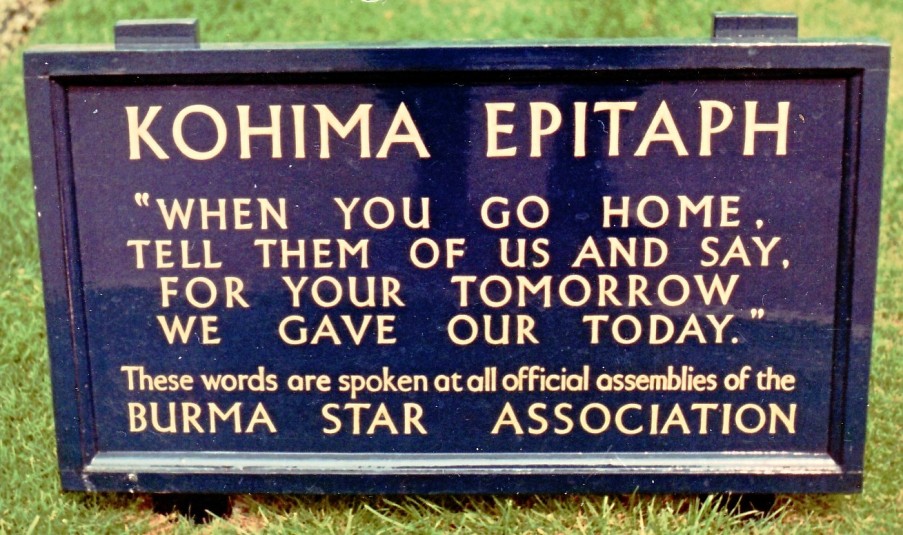
1942 saw Jack’s return posting to India, this time serving on the eastern boarder, meeting the Japanese Army that had advanced through Burma. There would have been various conflicts and skirmishes over a year or so which culminated in the Battle of Kohima (4th April to 22nd June 1944). Jack was wounded in the Battle and died on the 5th May aged 31 yrs. He did not live to see the defeat of the Japanese in what was to be a significant turning point of the War in Asia, marking the start of the British push of the Japanese out of Burma. Jack was buried in the War Cemetery at Imphal in North East India.
More information on Jack Lowes will be included in the next Parwich & District Local History Society News Quarterly (belatedly due out this month) and if you have any further information on any of the people named on the Parwich War Memorial please speak to Alan Lowes, Ben Bennett or email parwich@hotmail.co.uk or parwichhistory@hotmail.com.


 PARWICH.ORG
What an amazing life! Jack seemed to pack in more in his 31 years than most people in their lifetime’s (and more!). It is really very humbling to learn what sacrifices people made on behalf of our country, and this post turns a name on a memorial into a real human being. What’s more, it is very clear that Jack has his imortality – even from the small b/w image above, I can clearly see his son’s likeness.
this is a quick reply but I read a review of a book recently (will try and find it) but it the author had written a biography of all of the people who were named on her village war memorial. Just wondered if anyone else has heard of it? It’s such a lovely idea.
When I was looking through Alan’s research on his father’s life I was struck by the fact that I had not heard of the Battle of Kohima, though it has been compared in importance to the Siege of Stalingrad.
The Wikipedia article linked to above gives a good general account of the Battle of Kohima (see http://en.wikipedia.org/wiki/Battle_of_Kohima ), but it is also worth looking at two further accounts on the Durham Light Infantry website that contain first hand experience (see http://www.lightinfantry.org.uk/regiments/dli/other/wearside.htm and http://www.lightinfantry.org.uk/regiments/dli/other/kohima.htm ).