Major Benjamin Ingham writes:
I have been deployed for just over five months now and have been keen to try to explain what a typical day might entail. A single day feels like a week back in the UK, however very soon the hours blur into days and days into weeks. Regardless, I dare not count for fear of ‘wishing my life away’. Instead, I set small goals each week such as 30,000 meters on the rowing machine or 15 laps of camp. To put time into perspective, two weeks of R&R goes by quicker than a single 24 hour block of time in Afghanistan.
Living.
I share a tiny room with three other guys from my headquarters in a utilitarian ‘hardened accommodation’, so called because they are designed to protect against rocket and mortar attack. Bunk beds are used to save space and we share two wardrobes and a desk between us.
Our beds are shrouded using old sheets; if you are night shift, it keeps the light out when trying to sleep during the day and although small, it is the only truly private place available. With space at a premium, kit is stored in any available nook and cranny: under beds, on beds, behind the door, stuck on the wall, taped to the site of wardrobes… you name it, there is a piece of kit sitting, lying, stuck or draped on under or over it.
I avoid the morning shower rush and in order to save time, shower and shave in the evening. Water is also at a premium so we ‘ship shower’: water on – water off – soap on – water on – soap off – water off. All water is pumped from the natural Kabul sub-surface water supply and is therefore not drinkable and incredibly salty. It strips the skin of any moisture in just one short wash.
Feeding.
There are two DFACs (Dining Facilities) on camp run by a large civilian contractor. The cheapest contract wins and thus we lose out on food quality. For breakfast: sausage ‘things’, semi-cooked bacon and a choice of cereal is accompanied by 1 x serving of fruit, all served from an industrial sized food counter.
The large poster over the hand wash at the DFAC entrance proclaiming “eat 5 pieces of fruit a day to stay healthy” is simply there to taunt. The game is to try and take a carton of UHT milk without the staff looking and race into the office for 0730 hours (normally carrying breakfast in a white polystyrene box) for a fifteen minute handover with the off-going shift.
Working.
If the work tempo requires, the night shift remain to assist and we reciprocate in the evening. With my rank comes the responsibility of managing the office and all activity throughout the day. All requests for support and assistance from our subordinate units located across Afghanistan are immediately prioritized and actioned accordingly.
Although I am unable to say exactly what it is we do, the work is interesting and dynamic and involves coordinating military strike capability to the soldiers on the ground. The office is manned by a small team of five. We each have a precise role to play and job to do when assistance is requested. There are banks of monitors and a bewildering array of IT equipment available to complete our work – the number of ‘apps’ available to us would make Apple Computers Inc turn green with envy.
Despite the awesome array of ‘toys’ to play with, the most useful piece of equipment is the overworked coffee machine in a dusty corner of the office. It runs 24/7 and undoubtedly keeps us running. Lunch is eaten at our desks and again collected in a white box. Lunch is, invariably, never finished. The working day concludes with the arrival of the night shift. If it is busy, we stay to assist and then remain on-call 24/7.
Training.
After work, the gym is the single best source of mental and physical release from a stressful day. Located in a large tent, the kit is well past its best, and the tent has the acidic, musty aroma of all military training gyms. Rows of battered and sweat-rusted static bikes, running machines, rowing machines and free-weights are in constant use. Held together with tape and cable-ties they receive the full force of a day’s frustration.
After an hour of ‘phys’ (physical training), it is into the welfare tent to queue for a terminal. With up to 3000 people located on camp, it can often be a long wait or risk the world’s slowest WiFi. It is then off to shower and shave before the best part of the day: into bed and read for 40 minutes.
Cleaning.
Keeping clean and hygienic is a constant battle. Just walking outside leaves you covered in a fine dusty powder and the air has an unmistakable gritty texture. Laundry is a luxury I will never take for granted. We are issued a small laundry bag which, when full, can be dropped off with a contractor run service and 48 hours later clean(ish) kit can be collected. Nevertheless, during R&R it took three boil washes and three days of hanging outside to strip the odour out of my combat kit, and socks were discarded.
Once the day is over it becomes another statistic: a small neat red X on the calendar which hangs beside my bed.
Photos:
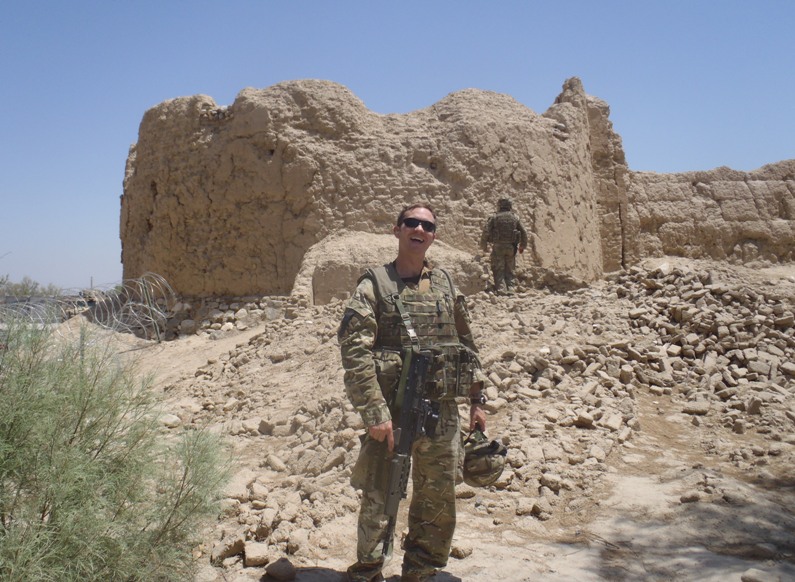
1. Looking around an old British fort in Shindan, near Jalalabad in eastern Afghanistan, built in the 1800s during one of the many conquest attempts. It is only preserved due to the exceptionally dry climate in that area.
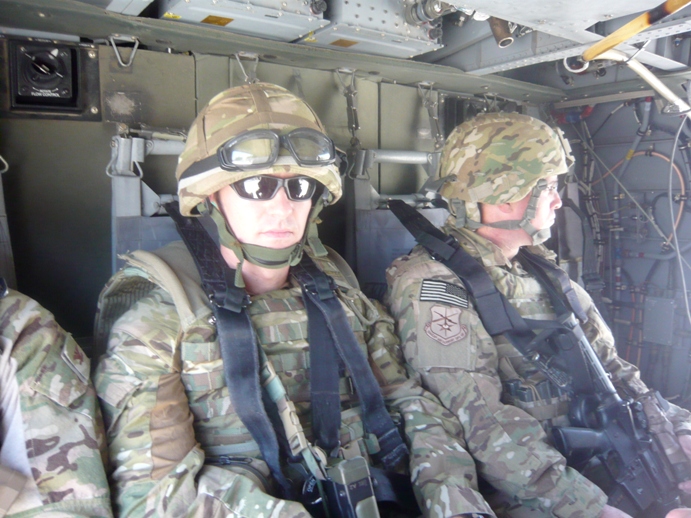
2. Air travel – the only safe way to move around Afghanistan.
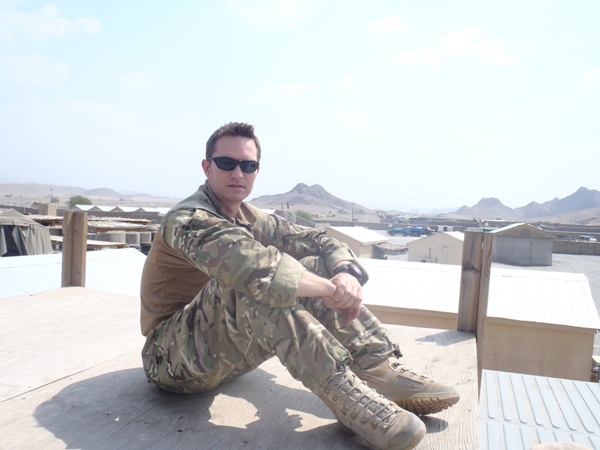
3. Out in one of the forward operating bases near the Pakistan border, the temperature was moving into the 100s by midday.


 PARWICH.ORG
Thank you for describing your day in detail… I wondered what you read at night at the end of your extraordinary and long days.
Just to echo what Heather says: thanks very much for sending us this vivid account of your day-to-day life (which certainly puts some of my own petty day-to-day inconveniences into sharp perspective). Your days don’t exactly sound fun-packed – to put it mildly – but I hope that there at least a few laughs and smiles along the way.