Artists to Africa
The arrivals and departures of summer migrants, such as Swallow, House Martin and Cuckoo, hint at the changing seasons and deliver a sense of connection with distant lands. In January 2014, a team of four SWLA artists accompanied the British Trust of Ornithology’s Head of International Research on a trip to Senegal. By bringing artists and scientists together we set out to raise the profile around some of the issues facing our African migrants.
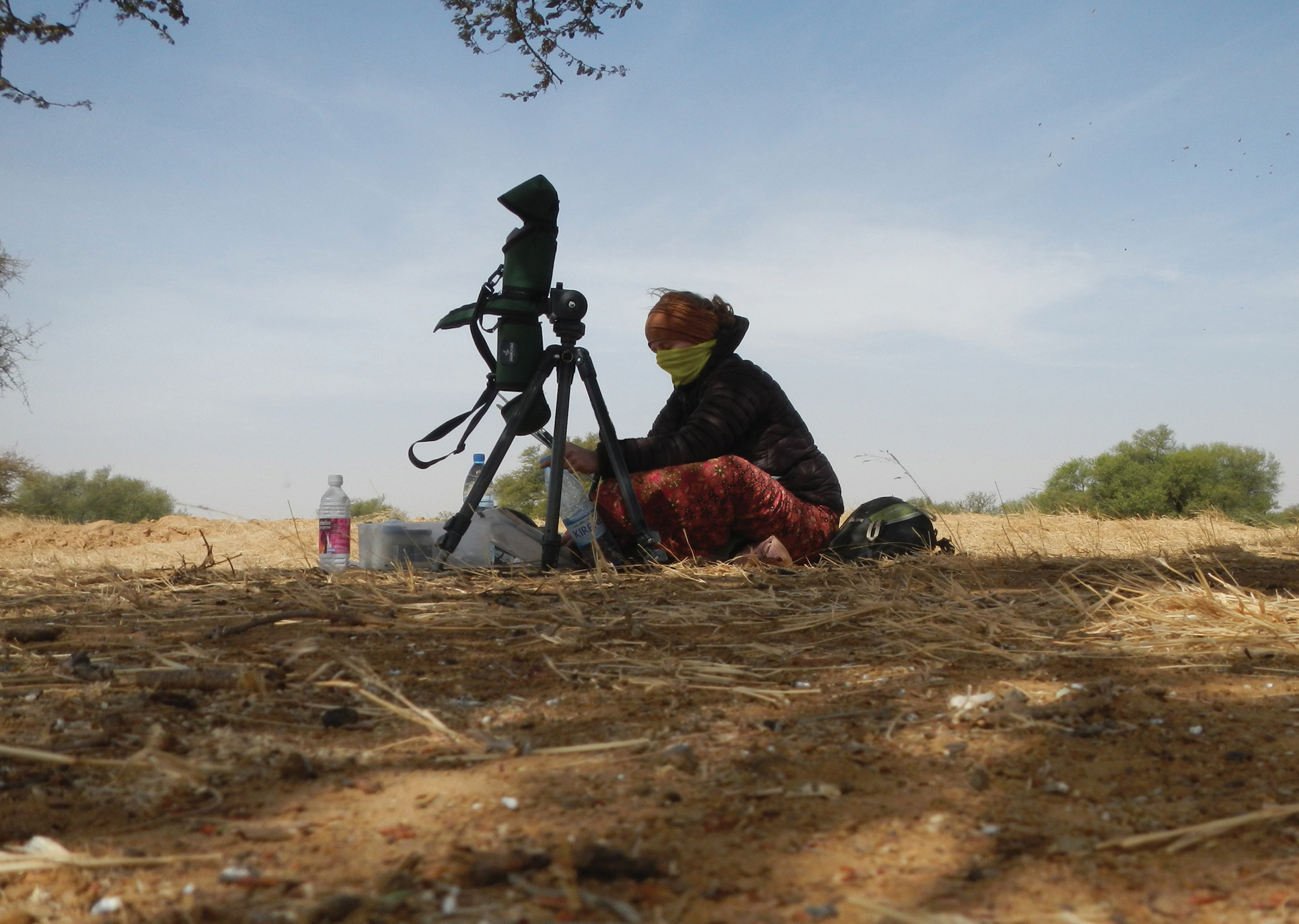
Esther will be showing some of her Senegal fieldwork in the Memorial Hall on the 22nd and 23rd of November 10am – 4pm along with some local work.
Studying migration
The BTO is working to understand why populations of many migrants are in decline. By bringing together studies here in the UK, with fieldwork in Africa and new tracking technologies that follow the birds on their migratory journeys, we hope to provide the answers needed to support conservation efforts to halt these declines. Our use of satellite-tracking has already revealed new information on the routes that our Cuckoos use during migration and identified the sites where they winter and stopover to fuel up before crossing the Sahara. see www.bto.org/cuckoos
Migration provides a powerful story for wider engagement with the research needed to identify why summer migrants are being lost. While we tend to think of these summer visitors as ‘our’ birds, most of them are only here for a short part of the year. Our satellite tags have revealed that a male Cuckoo may only spend five or six weeks here each summer, highlighting that we need to look across political boundaries if we are to understand the causes of decline. Much of the BTO’s work on migrants has been funded through the generosity of individuals – we have 1,842 Cuckoo Sponsors, for example – and initiatives like Artists to Africa provide a way of increasing this engagement further.
The 2014 trip to Senegal took the team to a part of West Africa where significant populations of our summer migrants spend the winter. Migrant waders, like Turnstone, Whimbrel and Wood Sandpiper, make use of the tidal wetlands near St. Louis in the north-west of Senegal, while the world-famous Parc National des Oiseaux du Djoudj holds hundreds of thousands, if not millions, of Sand Martin and high numbers of Sedge Warbler, Yellow Wagtail, Garganey and Chiffchaff. How many of our summermigrants return to Britain to breed will be influenced, as least in part, by what happens to the habitats used on these African wintering grounds.
Where art and science meet
Bringing together artists and scientists delivers different perspectives on the same scene. Both artist and scientist question what they see and engage fully with the landscape and birds around them, yet they look with different eyes. The trip was a learning experience for all those involved. For Phil Atkinson, the BTO’s Head of International Research, this was an opportunity to see the landscape in a different way; for the four artists, Robert Greenhalf, Bruce Pearson, Greg Poole and Esther Tyson, this was an opportunity to learn the context around what they were seeing and sketching. Why did the landscape look the way that it did? What were the birds doing and how were changes in the habitats here influencing their populations?
While science can provide the all-important evidence upon which conservation decisions and policy can be made, it is our emotional attachment to wildlife that will ultimately drive forward conservation action. Art and science are key players in delivering effective conservation action for migrants and other wildlife.
The artwork from this trip will form part of a book on migration and the issues affecting our declining summer migrants. Alongside the artwork will be a narrative that brings together scientific understanding with more personal stories around the wonder of migration. The book is due to be published in 2016.


 PARWICH.ORG
Leave a comment