Our thanks to Kevin “Magnus Pyke” S, for providing the following article.
Radon is a radioactive gas which is produced in the Earth’s crust from the breakdown of radioactive uranium. Certain parts of the country are prone to the release of radon from the ground, and the Derbyshire Dales have been designated as a radon affected area.
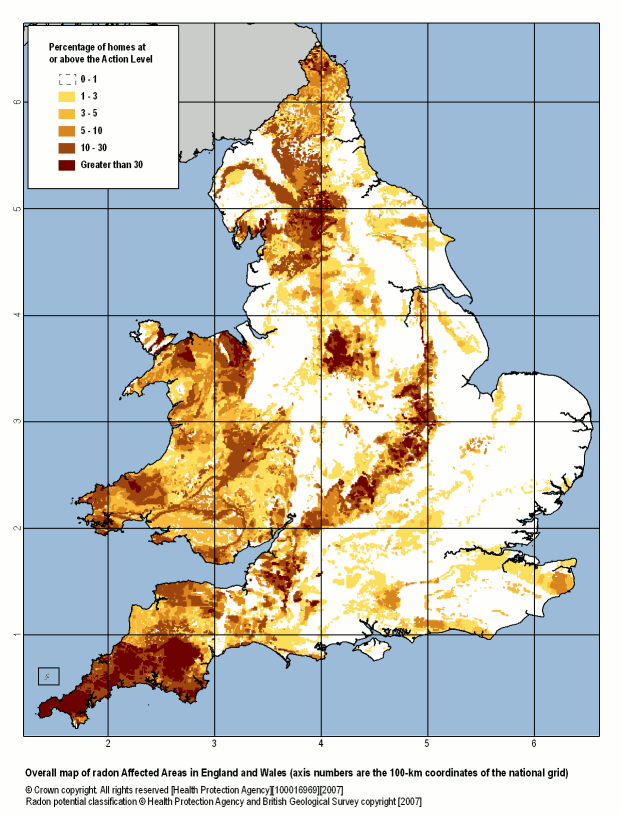
Please click to enlarge.
Radon in the soil and rocks mixes with air and rises to the surface, where it is quickly diluted in the atmosphere. Concentrations in the open air are very low and do not present a problem.
However radon that enters enclosed spaces, such as buildings, can in certain circumstances reach quite high concentrations. This can be a problem because it is a colourless, odourless gas which consequently goes unnoticed.
Being radioactive, radon is carcinogenic and high concentrations of radon are believed to be the second most important cause of lung cancer after smoking, accounting for around 5% of lung cancer deaths.
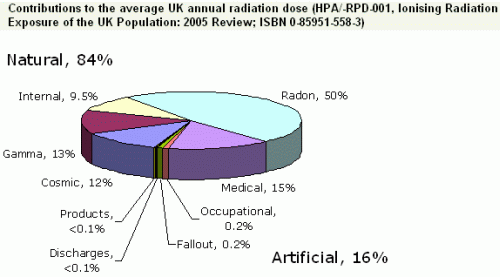
Radon contributes by far the largest component of background radiation dosage received by the UK population (see chart below) and while the largest radon doses arise in domestic dwellings (due to the longer time spent there), significant exposures are possible in workplaces.
Because radon enters a building from the ground on which it is built, the most effective method of reducing indoor levels is to prevent it entering the building in the first place.
This is achieved by installing a radon barrier, as has just been done with the new Memorial Hall. This is a fully sealed, very low gas permeability barrier (sometimes referred to as a membrane) placed over the entire footprint of the building at the time of construction.
The Health Protection Agency recommends that people in affected areas should test their homes for radon. Some people are alarmed when they receive details that their premises has an elevated level of radon, and are unsure of what steps to take next.
The Derbyshire Dales District Council has recognised for many years that residents within the Dales need support in dealing with radon in their homes. They can offer specific advice, and in some cases they will make advisory visits to homes, in order to give step-by-step guidance on what action to take to reduce the level. Their telephone number is: 01629 761212.
For anyone wanting more information, the Health Protection Agency website contains some very helpful information.
Home testing kits can be purchased from the UKradon website, priced at £43.70.


 PARWICH.ORG
Leave a comment