Archive for the ‘History’ Category
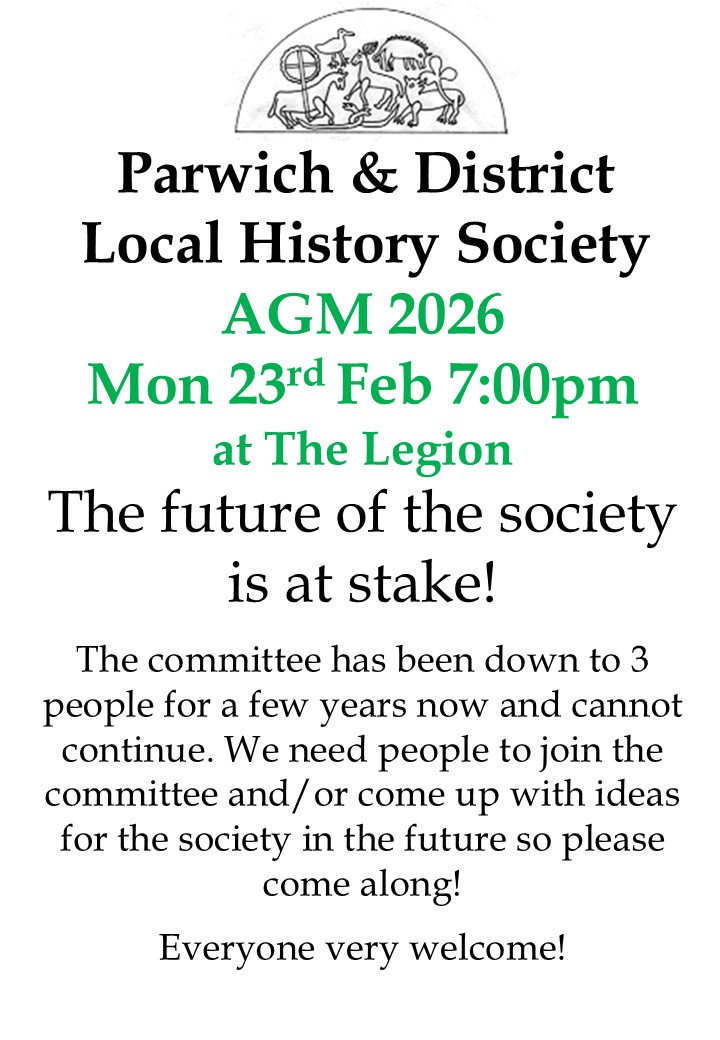
Parwich History Society
Posted in History on Friday February 20, 2026| Leave a Comment »
Parwich History Society
Posted in History on Friday February 6, 2026| Leave a Comment »
Parwich History Society
Posted in History on Monday January 26, 2026| Leave a Comment »
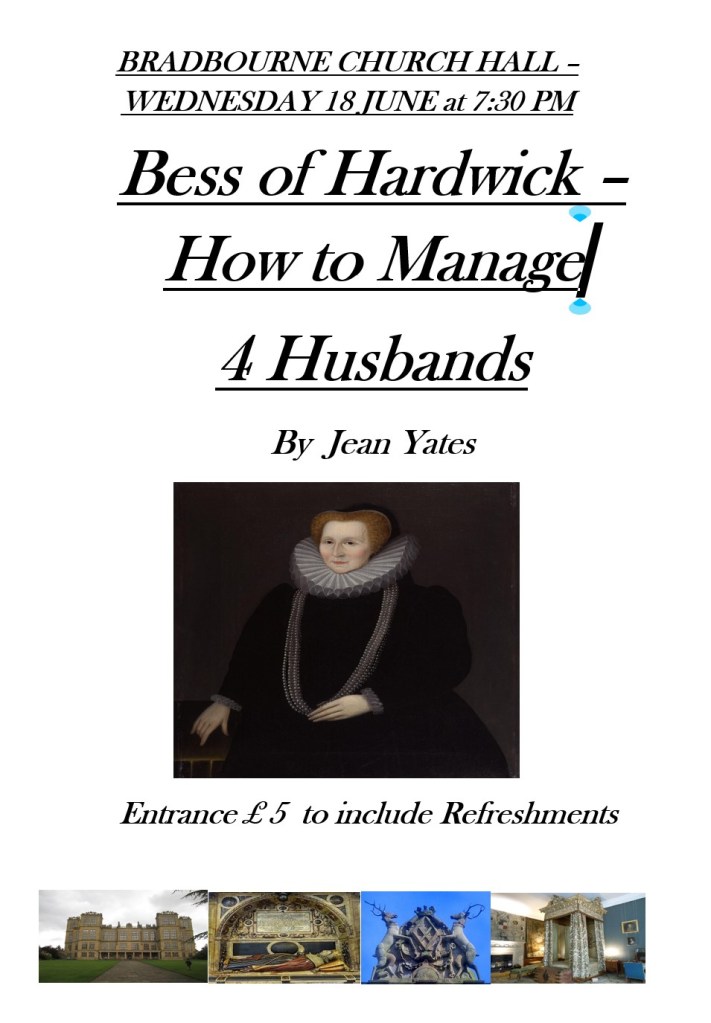
History Talk in Bradbourne
Posted in Events, History, Societies on Wednesday June 11, 2025| Leave a Comment »
Parwich Postcards
Posted in History on Sunday October 6, 2024| Leave a Comment »
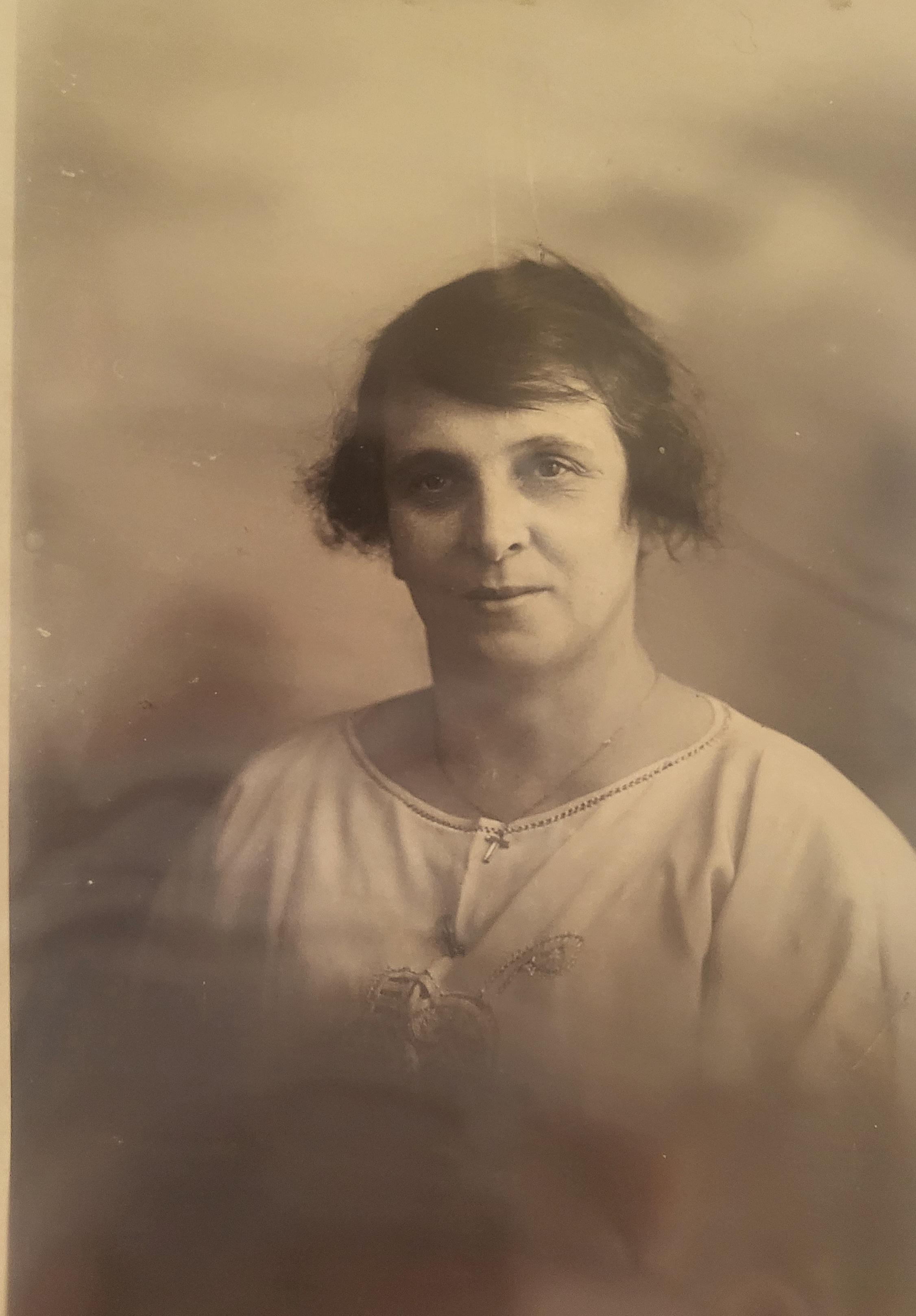
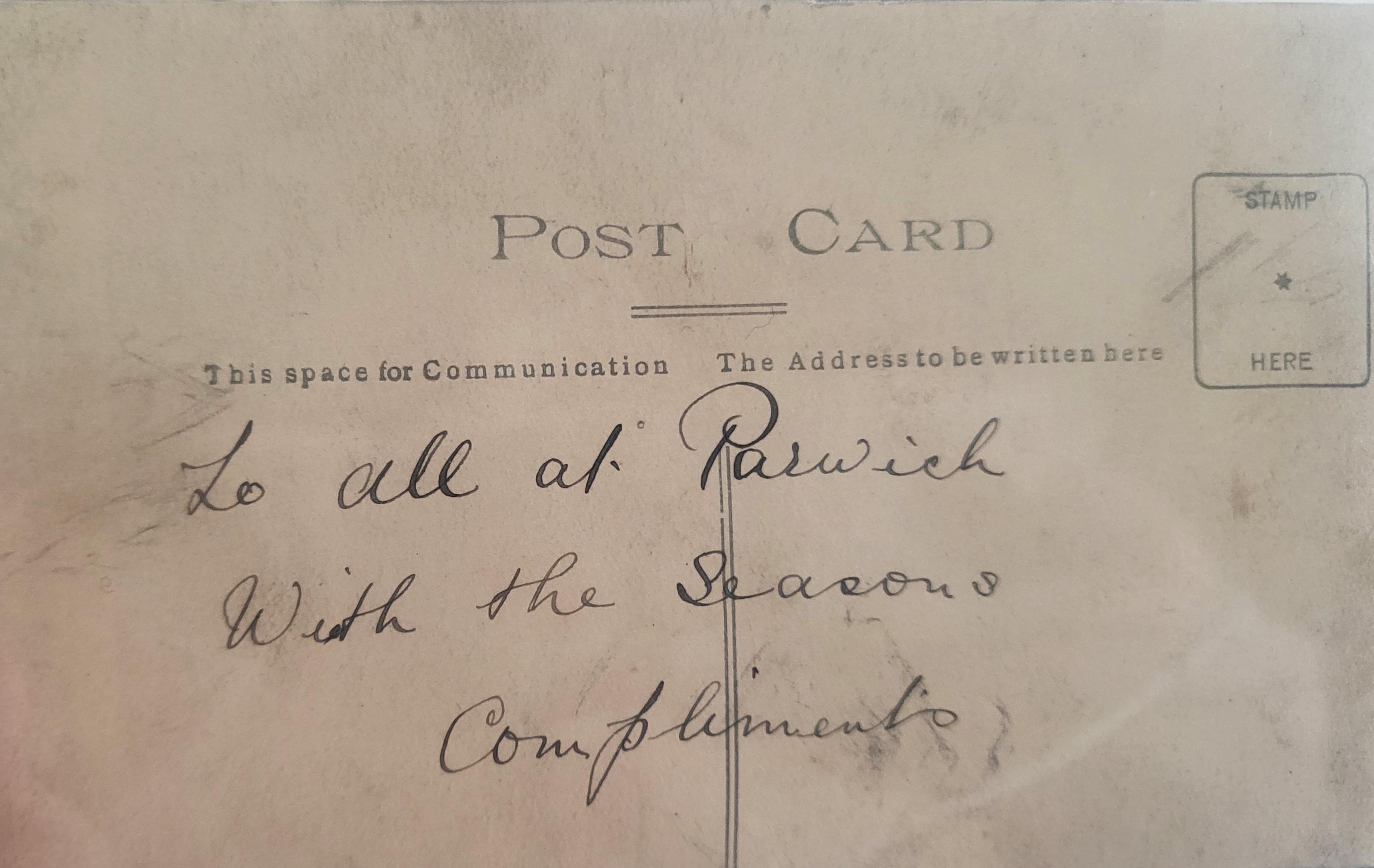
Ow do, as my granddad would say. Over the last decade I’ve collected Parwich postcards or copies, and have quite a collection. It’s amazing how little have changed. This one intrigued me though as it has a lady on the front and Season’s Greetings to all of Parwich on the back.
Does anyone recognise her?
I’m more than happy to scan all the postcards and share with those interested without filling up the blogs time of uploading. It just this one fascinated me.
I have another one of a wedding, but packing up to leave its gone walkabout.
Any insight would be super.
Caroline W. Cjgregory@live.co.uk
Alsop Hall
Posted in Alsop, History on Wednesday July 24, 2024| 1 Comment »
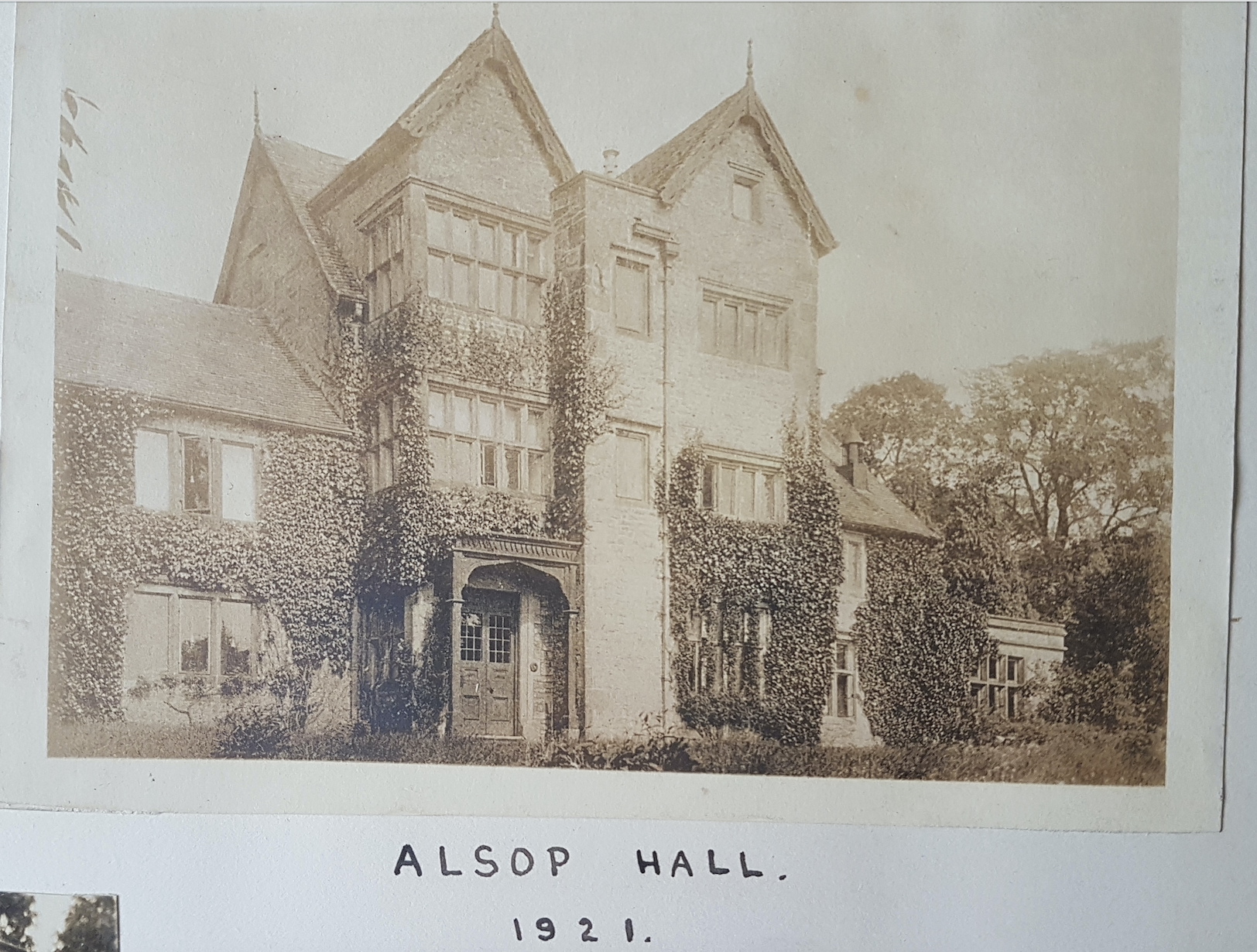
We have recently recived this informtaion about Alsop Hall following a thread on Parwich.Org going back to 2010:
“I can shed a little light on this query.
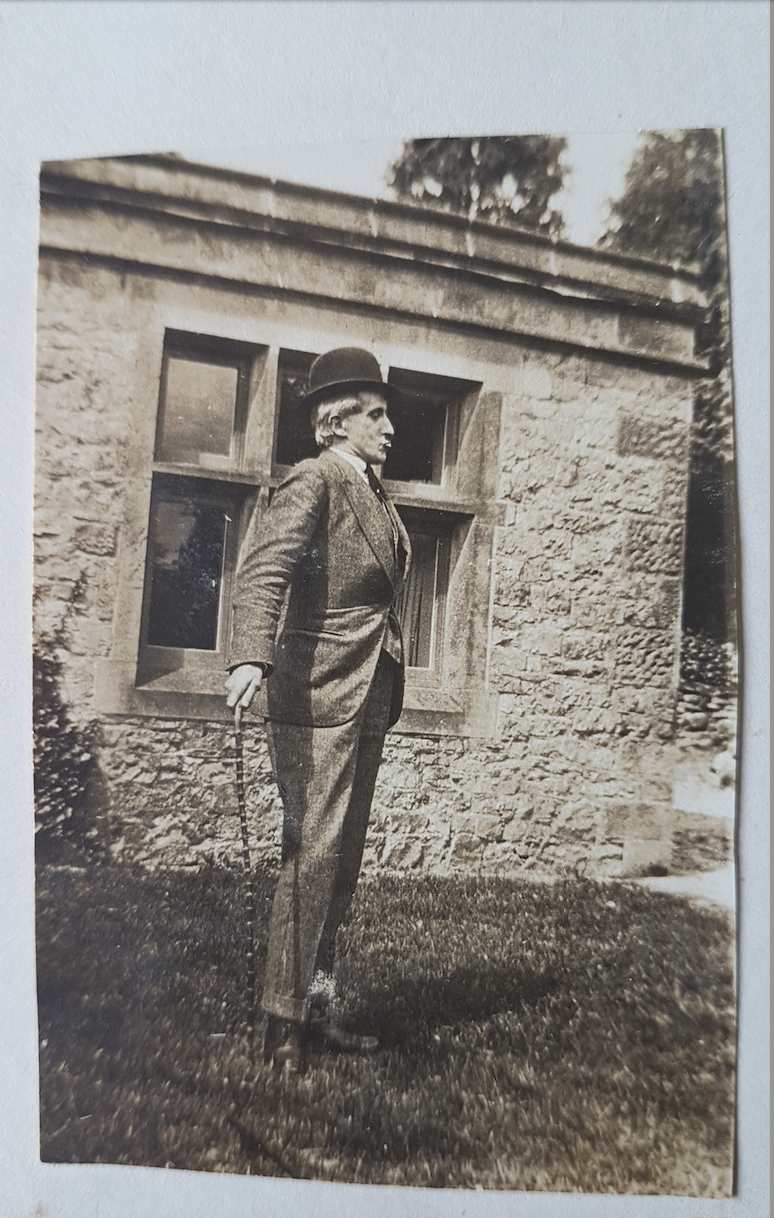
There is a photo of Alsop Hall in an old photo album I have inherited, taken in 1921. See attached photo. There is also a picture of a man my father said was the owner of the hall at the time and he gave his name as Norris Heald.
Hope that helps,
We are not related to the family, but I would be interested to know if you discover anything more.
Kay H”
Request for information
Posted in History on Saturday April 6, 2024| Leave a Comment »
Wondering if you can help. I recently found an article written almost 20 years ago by a Mary Whitechurch (nee Lewis) for the Parwich & District Local History Society telling the story of the Evans Family of Darley Abbey. I wondered if anybody knew whether Mary was still alive/contactable as I have recently been given copies of 3 photographs of possible family members which she might have been able to identify.
Regards
Barrie Lockwood
Darley Abbey History Group
Minninglow Limekiln Wins Award
Posted in Ballidon, Environment, History on Thursday December 21, 2023| Leave a Comment »
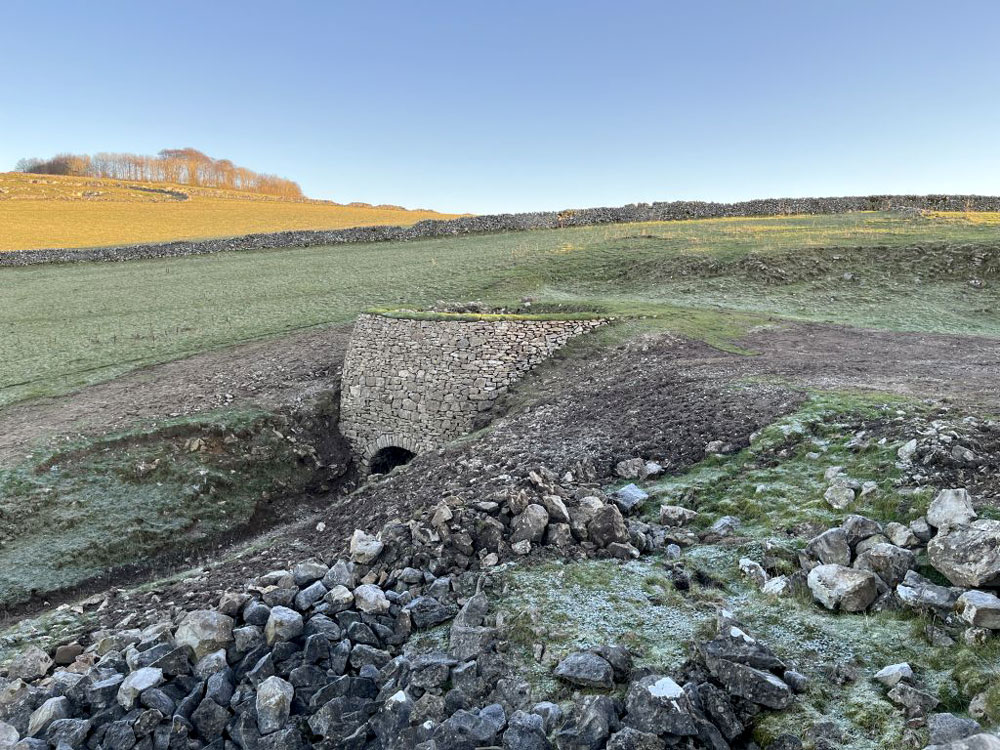
A recently restored nineteenth century lime kiln located in the heart of the Peak District National Park countryside has won an architecture award from the Derbyshire Historic Buildings Trust. The limestone built structure – a Grade II listed building – won the ‘Restoration of an Historic Garden or Landscape’ award for its significance in the wider landscape at Minninglow. The award was presented by architectural historian Jeremy Musson to the landowner Mark Edge and the architect Dan Greenway of Evans Vettori, during a ceremony at Buxton Crescent’s Assembly Rooms.
Derek Latham, chair of Derbyshire Historic Buildings Trust, said: “Lime kilns are a visible link in the landscape to our agricultural and industrial past. It is important to preserve these structures in place to reveal the stories of the landscape through time. This kiln is an important historic feature in its setting and its excellent restoration retains it for people’s enjoyment and understanding now and in the future.”
Minninglow lime kiln is of special interest because it is believed to have produced lime for the construction of the Cromford and High Peak railway and embankment, which now forms part of the High Peak Trail. It is a large lime kiln built in limestone blocks, it stands five metres high and is set into a cutting in the hill. Back in the day, limestone would have been extracted from a small quarry nearby, broken up and fed into the top of the kiln, to be burnt and raked out from the arch below. Once the railway was running, lime produced by the kiln may have been transported elsewhere for use in agriculture, construction or other industries, until it eventually fell out of use.
The lime kiln collapsed during the exceptionally wet winter of 2019/2020 bringing down a large portion of the structure. Incredibly, it revealed that the last ‘charge’ of limestone was never fired and remained in the kiln. Some of the kiln walls were intact too.
Rebekah Newman, manager of Defra’s Farming in Protected Landscapes (FiPL) programme in the Peak District National Park, said: “As a significant part of the National Park’s industrial heritage and a Grade II listed building, we needed to support Minninglow Grange Farm to secure the limekiln’s future and were able to do so through FiPL.”
Through FiPL, the National Park awarded a £96,000 grant to the landowner for the restoration of the Minninglow lime kiln. With listed building consent obtained, the restoration took place in summer 2022, carried out by Restoration Projects Ltd., and supervised by Evans Vettori Architects. The restoration work involved replicating the limekiln’s original stone coursing – fortunately, there were photographs to refer to. Stones were specially selected and placed with weathered faces on the exterior surface. The surrounding soil was also stabilised.
Mark Edge, from Minninglow Grange Farm, said: “The lime kiln is very visible due to its size and position, it’s seen by people passing by on the trail, so when it collapsed we wanted to repair it. We’re passionate about preserving our agricultural and industrial heritage, this lime kiln played an important part in the past. Thanks to the painstaking efforts of the stone masons and the support of the Peak District National Park Authority, we’ve been able to save this unique historic feature for people to appreciate now and in the future.”
Thanks to the Edge family, walkers are able to access the lime kiln directly from the High Peak Trail. The nearest car park is at Minninglow Car Park, DE4 2PN. The lime kiln is a 15-minute walk away along the trail in the direction of tree-topped Minninglow Hill.
For more information about the FiPL programme for farmers and land managers, and FiPL projects in the Peak District National Park, visit http://www.peakdistrict.gov.uk/fipl
History talk at Bradbourne Village Hall
Posted in Events, History, Societies on Monday October 16, 2023| Leave a Comment »
CANCELLED
Friday 20th October 7.30 pm
Blowing hot and cold – the impact of weather on English church design from 11th century to modern times
Speakers Stephen JD Williams and Jean Yates
Refreshments provided
Parwich Hoard
Posted in History, Societies on Tuesday June 20, 2023| Leave a Comment »
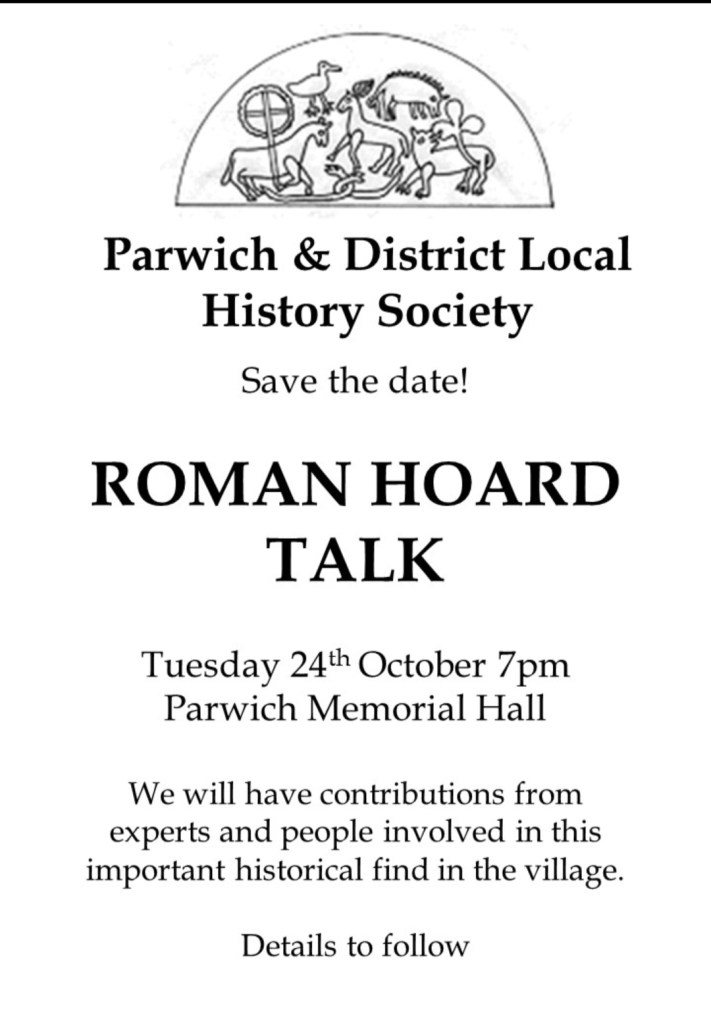
Every year Buxton Museum run a series of talks as part of Buxton Festival Fringe. A highlight this year is a talk about some of the archaeological treasure recently found in Derbyshire, including the Parwich Hoard. The talk is free on Wednesday 12th July at 1pm.


The Parwich & District Local History Society is also planning an event to show case the Hoard…
Royston Grange Walk
Posted in History on Saturday May 13, 2023| Leave a Comment »
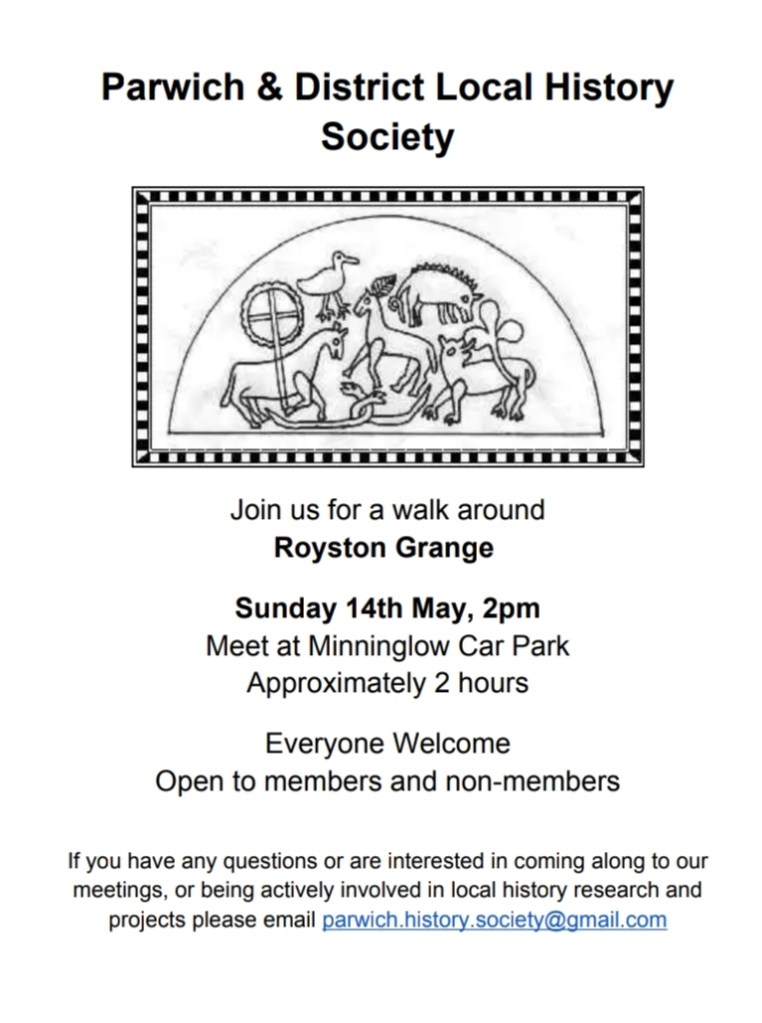
Suitable for all ages, approx 3 miles, mostly on tracks but the middle section is across fields and includes a couple of step-over wall stiles. Dogs on leads welcome.
Royston Grange Walk
Posted in History on Saturday May 6, 2023| Leave a Comment »
Suitable for all ages, approx 3 miles, mostly on tracks but the middle section is across fields and includes a couple of step-over wall stiles. Dogs on leads welcome.
Royston Grange Walk
Posted in History on Monday April 24, 2023| Leave a Comment »
Bradbourne Mill Open Days
Posted in History on Monday February 27, 2023| Leave a Comment »
I am the owner of the historic Grade II Water Mill located between Bradbourne and Tissington and thought our local community would be very interested in our first public opening dates starting this year. I hope you may be able to pass on the information.
Bradbourne Mill is the oldest surviving water mill in Derbyshire and the earliest historical records take the site back to 1180 when it was held by Geoffrey de Cauceis, great grandson of Henry de Ferrers. The Bradbourne family became the first recorded tenants of the mill; later Roger de Bradbourne sub-tenanted the water mill to the canons of Dunstable Priory who held a cell in Bradbourne next to the church very close to the Mill. The current water mill that exists today showcases the oak timber hurst frame dendra dated to 1625-1630 and the exposed mill workings and water wheels, however, it is likely the stone building is of an earlier date.
For the first time Bradbourne Mill will be open to the public in May this year on three dates below between 10 – 4pm.
Thursday 18th May 2023
Tuesday 23rd May 2023
Wednesday 24th May 2023
If anyone would be interested in visiting the site for an hour tour, then please see the attached website and link.
https://thewatermill-bradbourne.co.uk/open-days-%26-conferences
The charge is £5 per person for entrance and refreshments. The proceeds will be shared between the maintenance of the water wheel and Tissington and Bradbourne Churches.
Sandy Potter
Owner
History Society AGM
Posted in History, Societies on Saturday February 25, 2023| Leave a Comment »

History Society AGM
Posted in History, Societies on Saturday February 11, 2023| Leave a Comment »
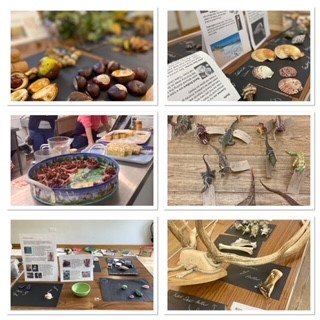
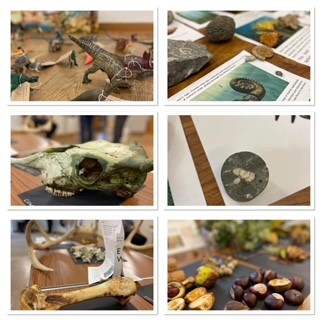
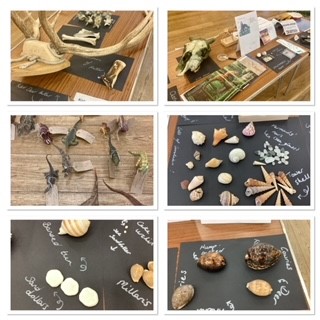
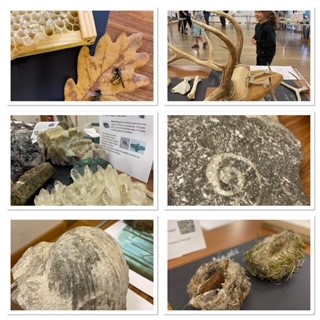
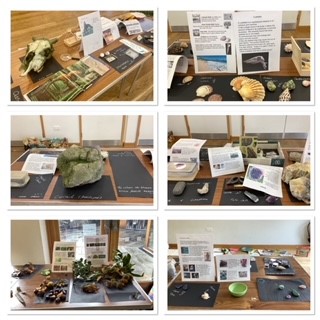
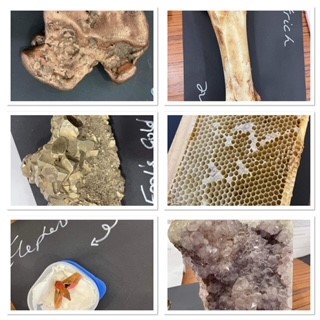
Ben & Cate’s Museum Day Photos
Posted in Environment, History, Young people on Thursday October 27, 2022| Leave a Comment »
Talk at Bradbourne
Posted in History on Monday September 19, 2022| Leave a Comment »
D day and the Battle for Tilly Sur Seules and the Logistics of getting an Army up through Europe
with Rev Steve Williams and Jean Yates
Wdenesday 21 Spetember 7.30 in Bradbourne Church Hall
£5 to include refreshments
Talk at Bradbourne
Posted in History on Tuesday September 6, 2022| Leave a Comment »
D day and the Battle for Tilly Sur Seules and the Logistics of getting an Army up through Europe
with Rev Steve Williams and Jean Yates
Wdenesday 21 Spetember 7.30 in Bradbourne Church Hall
£5 to include refreshments
Parwich Publications for Sale
Posted in Classified adverts, History on Wednesday July 27, 2022| Leave a Comment »
Parwich History Society has a number of items for sale:
Voices: Women of A white Peak Village

Compiled and edited by Gillian Radcliffe in 2004, this book gives a fascinating insight into the lives and experiences of the women of Parwich past and present. It is illustrated with photographs and runs to 218 pages. £5.
A Parwich Walk

Written by Peter Trewhitt and Patti Beasley in 2002, this 28 page booklet gives an historical overview of the village with handrawn maps and illustrations and a few photographs. Although a some updating is required, the village has changed very little in the last twenty years. £1
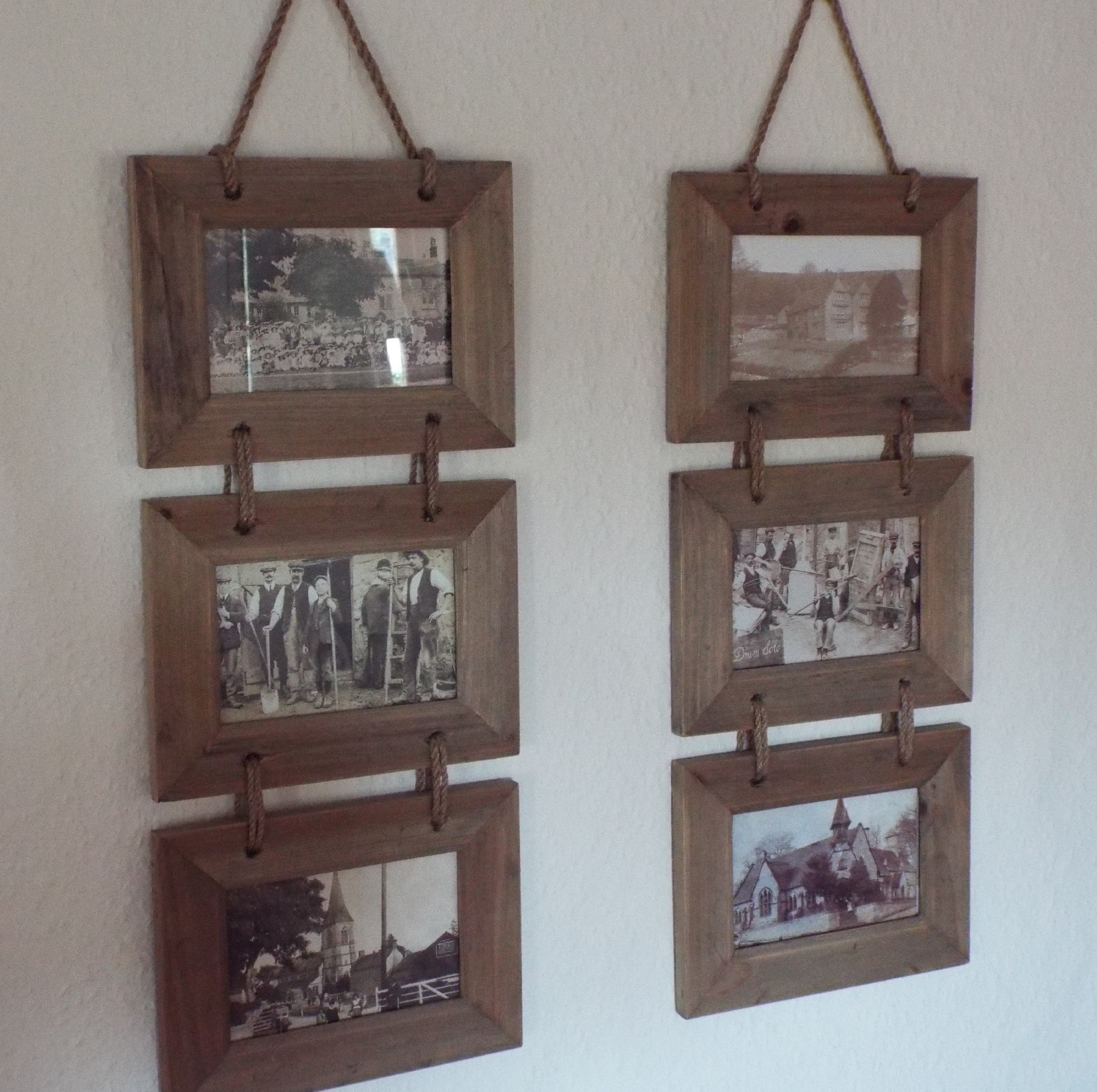
Postcards

A set of 8 postcards reproduced in 2003 from old photographs. £1 for the set, 20p for individual cards.
All items are available from Fiona H, Nethergreen Farm. tel: 390191 email: fiona.parwich@gmail.com
Thanks to Saskia T who has sent this photograph with the comment “The postcards look great grouped together. I put them up in frames on the wall in the S/C cottage and people certainly comment on them. The other two items are also regularly used.”
History Society AGM
Posted in History, Societies on Tuesday June 14, 2022| 1 Comment »
Memories of Parwich
Posted in Environment, History, Uncategorized on Thursday October 7, 2021| Leave a Comment »
We have received this lovely email from Anne F recalling happy Parwich days:
I discovered your website whilst thinking about my parents who met during WW2 at Parwich hospital !! My mother was a nurse and my father was convalescing and many wonderful and lasting friendships were made during that time. Parwich has always had a very special place in our hearts and I grew up visiting the village and Parwich Hill many times and hearing many stories which we continue to recall to this day. Mum died last year age 98yrs and we have been thinking about how we could perhaps donate something towards the village. We brought Mum for her last visit only several years ago and drove her up the back lane that winds behind the hill and parked by the stile that accesses the footpath across the fields and to the top of the hill. Many memories !
We don’t have a huge contribution and wondered whether we could donate something towards your planting in Pump Hill ? Mum and Dad loved Parwich and spent their lives walking and enjoying the countryside. It would be lovely to contribute something in their memory.Perhaps there may be room for some more woodland flowers ?
History Society AGM
Posted in History on Thursday February 25, 2021| Leave a Comment »
Parwich Primary School: Remembrance 2020 – Letter to the Community
Posted in Arts, Crafts, History, School, Uncategorized on Sunday October 18, 2020| Leave a Comment »

Parwich Primary School: Remembrance 2020 – Letter to the Community
Posted in Arts, Crafts, History, School, Uncategorized on Wednesday October 7, 2020| Leave a Comment »
Historic cricket match information wanted
Posted in History, People on Friday August 28, 2020| Leave a Comment »
We have received the following request:
Does anybody know how to find out if there are any records that would show past cricket matches played in Parwich? It’s for a friend of mine, Wayne Ward, his Great-Grandad’s name was Arthur Smith, he had some cricket playing brothers (Les and Lawrence) and his Dad (Charlie Smith) and one or possibly both of his uncles (George Smith and William/Bill Smith) were cricketers too. He is trying to find out if any written records might exist. He has a 1910s or 20s photo which shows his Great Grandad’s Dad and Grandad (team manager), but other than knowing that Arthur Smith and his brothers were cricketing well into the 1940s and probably beyond, he doesn’t know much else! Any information would be greatly appreciated.
Thank you lucy B
Parwich Hall in 1924
Posted in History, Uncategorized on Thursday July 2, 2020| 1 Comment »
We have recently been sent digital copies of photographs of Parwich Hall in 1924. At that time the Hall was owned by Major Gainsford, a colliery owner from Sheffield who bought the estate in the 1915 sale and then sold it in 1931 to the Crompton- Inglefields. A woman appears on a number of the photos and we have been told that the text says she is “Miss Ina”. Major Gainsford’s wife’ name was Edith Geraldine so it is possible that Miss Ina might have been Geraldine which was misread. Or maybe a name she was known based on Geraldine. If anyone has any information on the Gainsfords and the mysterious Miss Ina, we should love to hear it.

A thousand years of celebration
Posted in Carnival & Recreation, Church, History, Oddfellows, Wakes on Saturday June 27, 2020| 2 Comments »
Villages’ Wakes grew out of communities celebrating their church’s patron saint. For us that is St Peter whose feast day is the 29th of June, still used to to calculate the start of Parwich Wakes; our Wakes beginning on the nearest Saturday to the 29th of June.
The current St Peter’s Church was built in 1872/73, replacing the smaller Norman building also dedicated to St. Peter. We can see some features of the old Church today in the current building, including the tympanum over the west door, the archway of the west door, the archway between the tower and the nave and the carved faces high up in the side chapel. It is thought that the old church was built in the late eleventh or early twelfth century and would almost have certainly been dedicated to St. Peter as it is unusual for the dedication to be changed. It is possible that there was a previous Saxon church here, but the evidence is inconclusive.
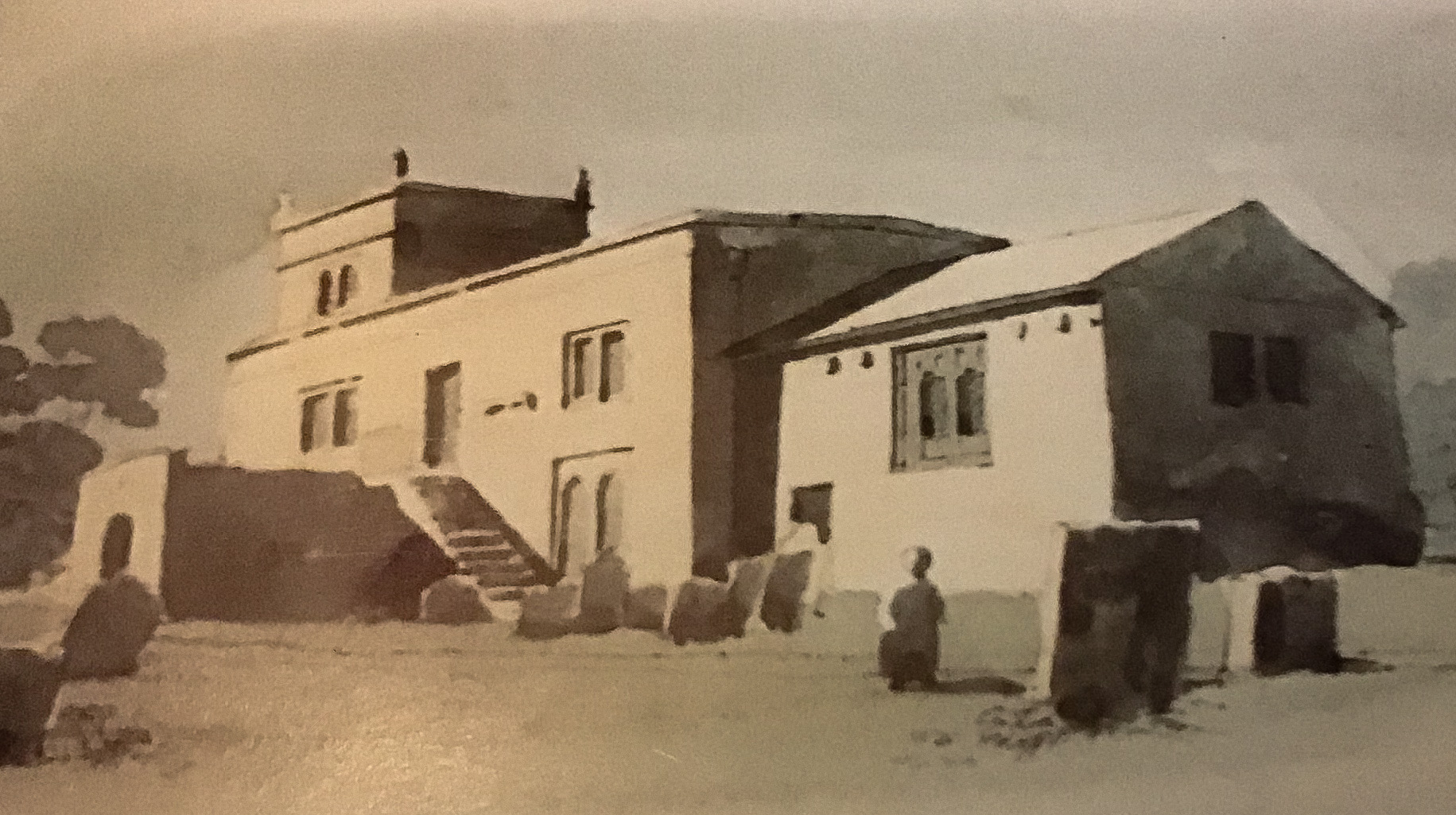
The old St Peter’s in a nineteenth century water colour
So we have been celebrating as a community at the end of June for at least nine hundred years, though perhaps much longer. These celebrations from the start would have included a lot more than just a church service. Processions and theatricals would have been included, possibly by the fourteenth or fifteen century involving a play celebrating Robin Hood and Maid Marion. The prettiest or best dressed youngsters might even have be elected to be that year’s Marion and Robin, a precursor to out Carnival parade and fancy dress competition. It is likely that there were local sports, foot races and perhaps archery competitions, certainly when archery practice was compulsory from the fourteenth right up to the sixteen century. ‘Beers’ were a big part of the celebrations, where local guilds and groups brewed beer to sell during the revels. This tradition was revived not so long ago with the Oddfellows Ale, brewed by Leatherbritches. The ‘beers’ raised money either to fund candles and devotion in the church for each guild’s favourite saint or to help guild members when times were hard. (more…)
History Society AGM
Posted in History on Sunday March 15, 2020| Leave a Comment »
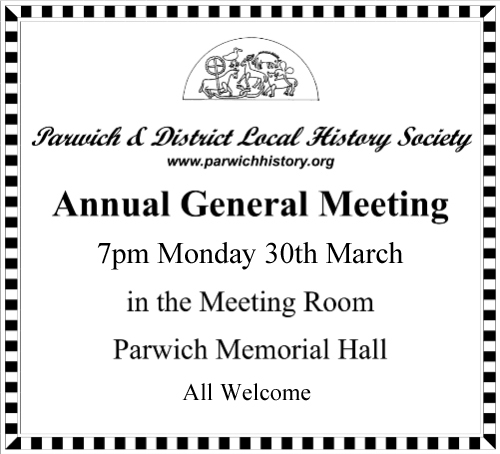
Talk Postponed
Posted in History on Thursday March 12, 2020| Leave a Comment »
The history talk on the Dunstable Annuls at Bradbourne on 26 March has been postponed
Bradbourne History Talk
Posted in Events, History on Monday March 9, 2020| Leave a Comment »
POSTPONED
Bradbourne Church Hall
Thursday 26 March. 7.30 pm
“The Dunstable Annuls”
a talk by
Rev Steve Williams and Jean Yates
Entrance £4 to include refreshments
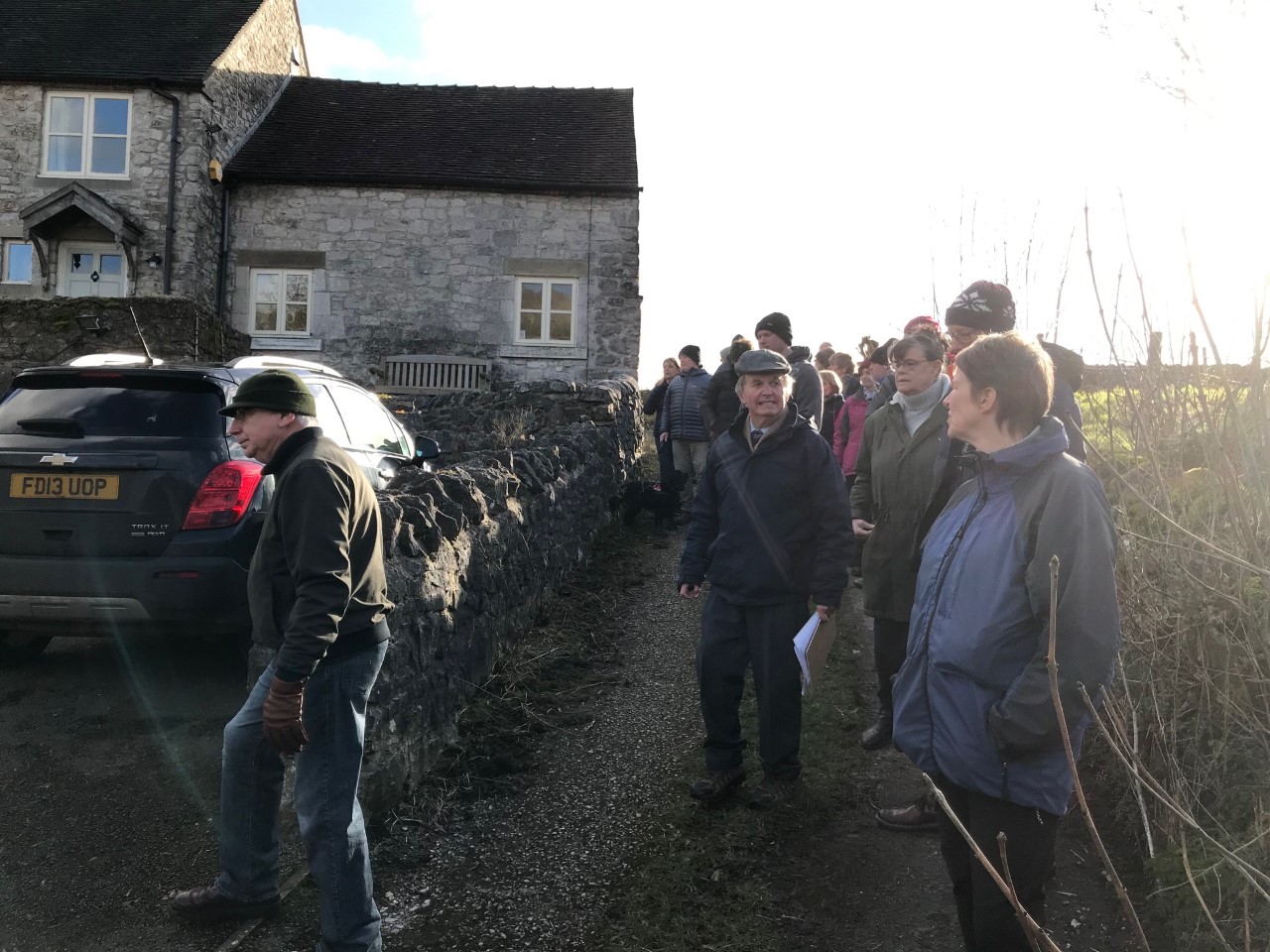
Denis’ Talk and Walk
Posted in History on Monday March 2, 2020| 1 Comment »

Good Turn Out for POP
Posted in History on Saturday October 12, 2019| 2 Comments »
Thank you Sally P for these photos of the recent Parwich Origins Project talk.


The start of what will hopefully be a fascinating project for our community
Parwich Origins Project – TONIGHT
Posted in History on Wednesday October 9, 2019| Leave a Comment »

History Talk at Bradbourne
Posted in History on Wednesday October 9, 2019| Leave a Comment »
October 10th 7.30pm at Bradbourne Church Hall.
A Talk entitled
The Met Office and The D Day Landings
by Jean Yates Of Dunstable.
Entrance £4 to include Refreshments.
Why is Parwich Here?
Posted in History on Friday October 4, 2019| Leave a Comment »
Why is Parwich Here?
Posted in History, Uncategorized on Sunday September 29, 2019| Leave a Comment »
History Talk at Bradbourne
Posted in History on Wednesday September 25, 2019| Leave a Comment »
October 10th 7.30pm at Bradbourne Church Hall.
A Talk entitled
The Met Office and The D Day Landings
by Jean Yates Of Dunstable.
Entrance £4 to include Refreshments.
Nethergreen Dig
Posted in History on Saturday May 4, 2019| Leave a Comment »
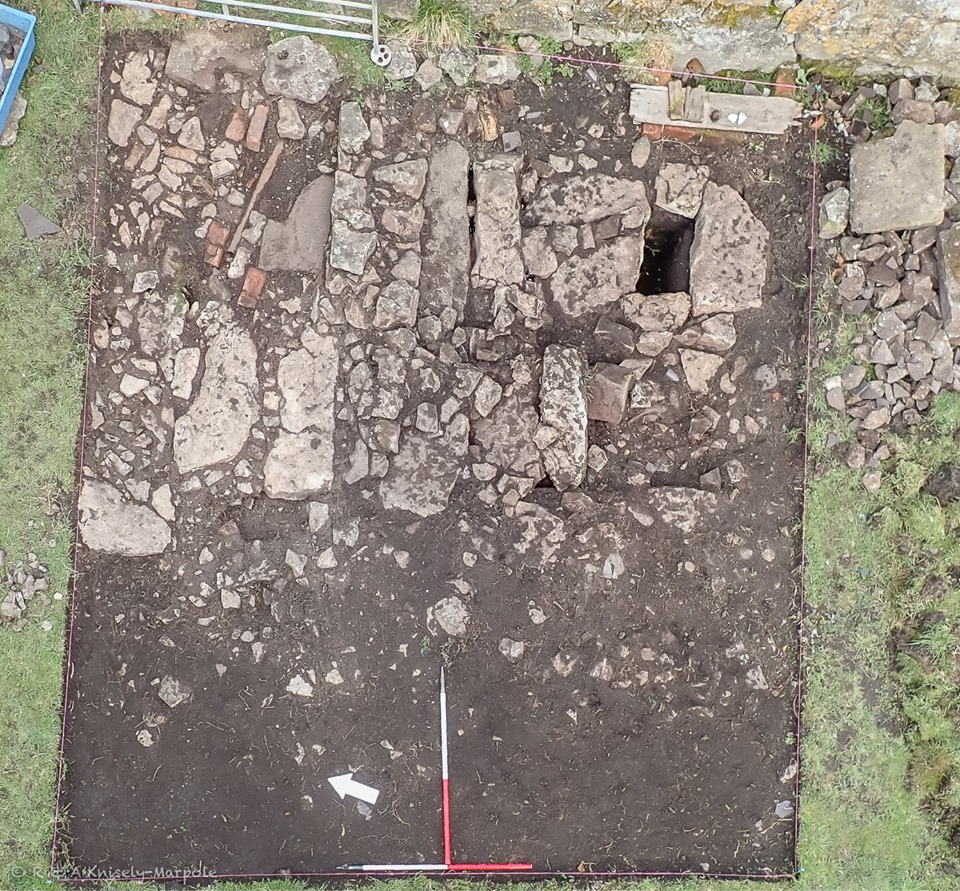
Thank you to Richard K-M for sending this polecam photo of the work the excavation group at last Sunday’s Archaeology Day.
Archaeology Day Preparations
Posted in History on Saturday April 27, 2019| 3 Comments »
Although the Day has been postponed to tomorrow Sunday 28 April, preparations were underway on Friday. Two areas have been marked out for the geophys team, one in Chris and Ruth’s orchard and one in the field at Nethergreen Farm. The geophys scanner cannot work in wet conditions so fingers crossed for a dry day tomorrow.
Friday also saw the removal of turf and loose stones from what will become the large excavation trench. With only an inch or so of top soil removed interesting stones were starting to be revealed which indicate an earlier construction. The trench is now ready for a full excavation.

Everyone is welcome to come along and have a go at the geophys survey and excavating the trench. There will be a few archaeological activities for children. Please bring along any interesting finds you may have from the village and also your knowledge about local water sources. We are hoping to start a major project on the importance of water to the village, this Archaeology Day is our first step towards this project.
Fiona H. History Society
Contact the blog team
Latest Comments
-


-
-
You can follow @parwichblog on Twitter, and you can also "like" us on Facebook.
-
Recent Posts
 PARWICH.ORG